Pi vs Gamma: Which AI Presentation Tool Is Better for Professionals?
Pi vs Gamma: Which AI Presentation Tool Is Better for Professionals?
AI presentation tools have made it much easier to turn an idea into a polished-looking draft. If you are comparing Pi vs Gamma, you are probably not asking whether AI can generate slides quickly. You are asking a more practical question: which tool is better when the presentation needs to work in a real professional setting?
Gamma AI is known for fast content generation and clean presentation-style outputs. Pi, short for Presentation Intelligence, is built for a deeper business presentation workflow, where structure, logic, refinement, and visual quality matter as much as speed. The right choice depends on whether you need a quick draft or a business-ready deck.
The Real Difference Is Not Just AI Slide Generation
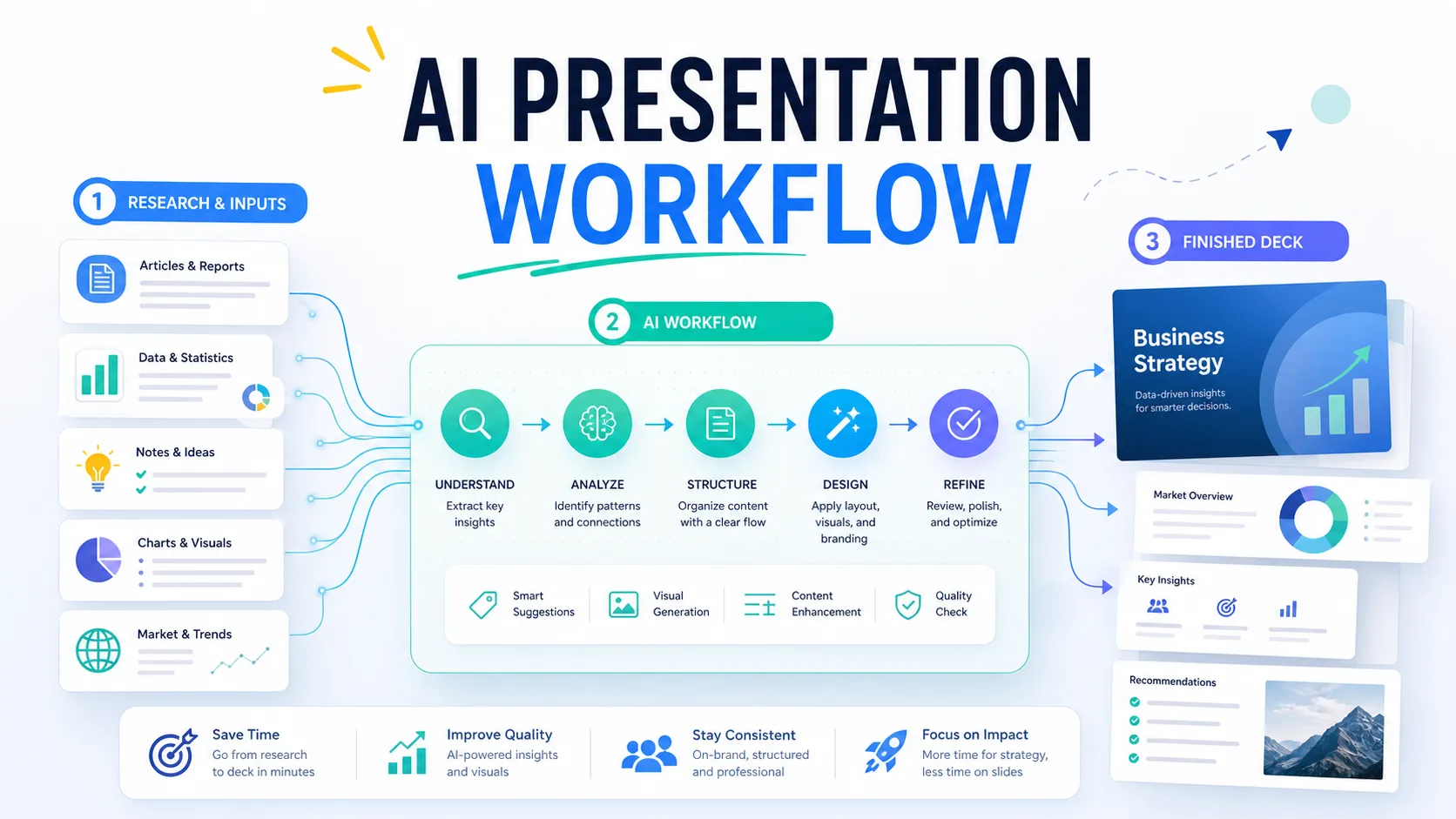
Many AI presentation makers are impressive at the first step: generating a deck from a prompt. That is useful, especially when you need to overcome a blank page or explore a topic quickly. But a professional presentation is not just a collection of slides. It must persuade, explain, align, or help people make a decision.
This is where the difference becomes important. A fast draft can still require significant editing before it is ready for investors, executives, clients, partners, or internal leadership. The slide order may need adjustment. The argument may need sharpening. The design may need to feel more premium. The data may need clearer explanation.
So the better question is not simply “Which AI presentation maker is faster?” It is “Which tool supports the full workflow from idea to presentation-ready business deck?”
Where Gamma AI Works Well
Gamma AI works well when the goal is to create content quickly. It can help users move from a topic to a clean first draft without spending hours building slides from scratch. For lightweight presentations, internal explainers, early ideation, or simple educational content, that speed is valuable.
Gamma is also approachable for users who want a smooth writing-to-presentation experience. If you need to outline a concept, create a quick briefing, or share a readable presentation-style document, Gamma can be a strong option. It lowers the barrier to creating visual content and helps teams communicate ideas faster.
That makes Gamma a good fit for exploratory work. It is especially useful when the presentation does not require heavy customization, complex stakeholder logic, or a highly polished business narrative.
Where Professional Presentation Requirements Become Different
The challenge begins when the deck has to do more than summarize information. Professional presentations often need to guide decisions, defend a strategy, support a sale, or represent a company’s credibility.
In those situations, teams usually need:
- A clear business objective and audience-specific framing
- Strong narrative hierarchy across the full deck
- Layout control for complex ideas, comparisons, and data
- Visual polish that supports trust and executive attention
- Editing flexibility for stakeholder feedback and final refinement
A generated deck may be a useful starting point, but professional teams often need a workflow that helps them improve the argument, not just decorate the slides. This is the boundary between a quick AI draft and a business-ready presentation.
Pi vs Gamma: Professional Presentation Comparison
| Capability | Gamma AI | Pi |
|---|---|---|
| Draft speed | Strong for fast first drafts | Fast, with more emphasis on business-ready structure |
| Presentation logic | Useful for simple flows | Built around professional narrative and business logic |
| Editing flexibility | Good for lightweight content refinement | Designed for deeper deck refinement and stakeholder-ready output |
| Visual quality | Clean and modern | Premium, business-grade aesthetics for high-stakes use |
| Best-fit use cases | Internal explainers, quick briefs, early ideation | Pitch decks, sales decks, consulting reports, executive presentations |
| Workflow fit | Content-first generation | Strategy, structure, design, and refinement |
This comparison does not mean one tool is right for every user. Gamma AI is useful when speed and simplicity matter most. Pi is a stronger fit when the deck must persuade a professional audience and hold up in a serious business context.
How Pi Supports a Deeper Business Presentation Workflow
Pi is not just a generic Gamma AI alternative. It is an AI presentation maker designed for teams that need more than a polished first draft. Its value is strongest when the presentation must connect business reasoning, visual clarity, and professional polish.
That matters across use cases such as pitch decks, sales decks, consulting reports, executive presentations, brand proposals, market research decks, and product launch decks. These presentations are rarely solved by design alone. They require a structure that supports the objective of the meeting.
1. Business Logic Comes Before Slide Styling
A professional deck starts with logic. What is the audience supposed to understand? What decision should they make? What evidence supports the recommendation? Which message should appear first, and which details should be saved for later?
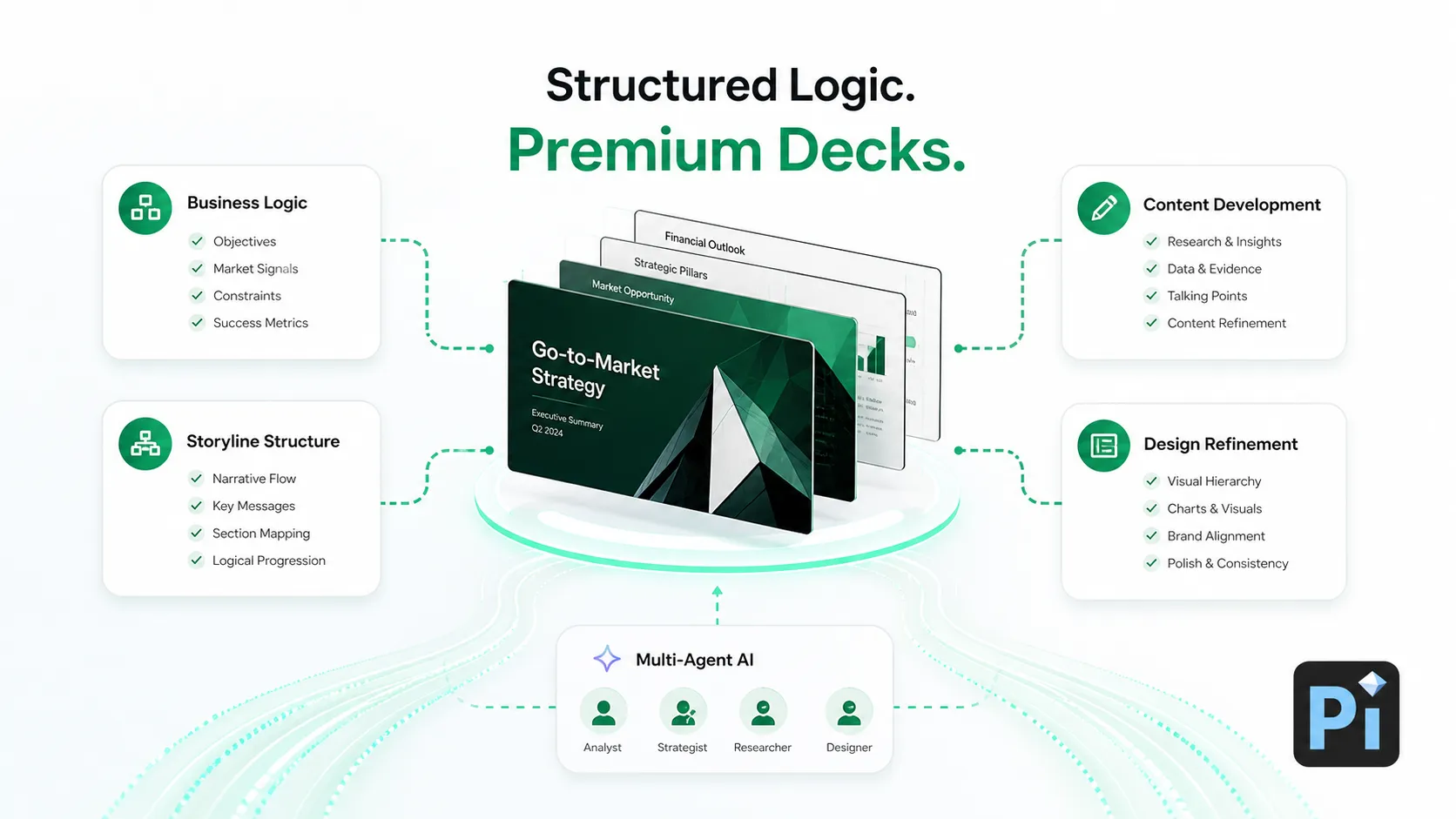
Pi helps users move from a rough idea or prompt into a clearer business structure. Instead of treating slides as isolated pages, Pi supports the development of a coherent deck flow. This is especially important for investor pitches, consulting-style recommendations, and executive presentations where every slide needs to earn its place.
Good styling can make a deck look presentable. Strong logic makes it useful.
2. Multi-Agent AI Helps Refine the Deck from Multiple Angles
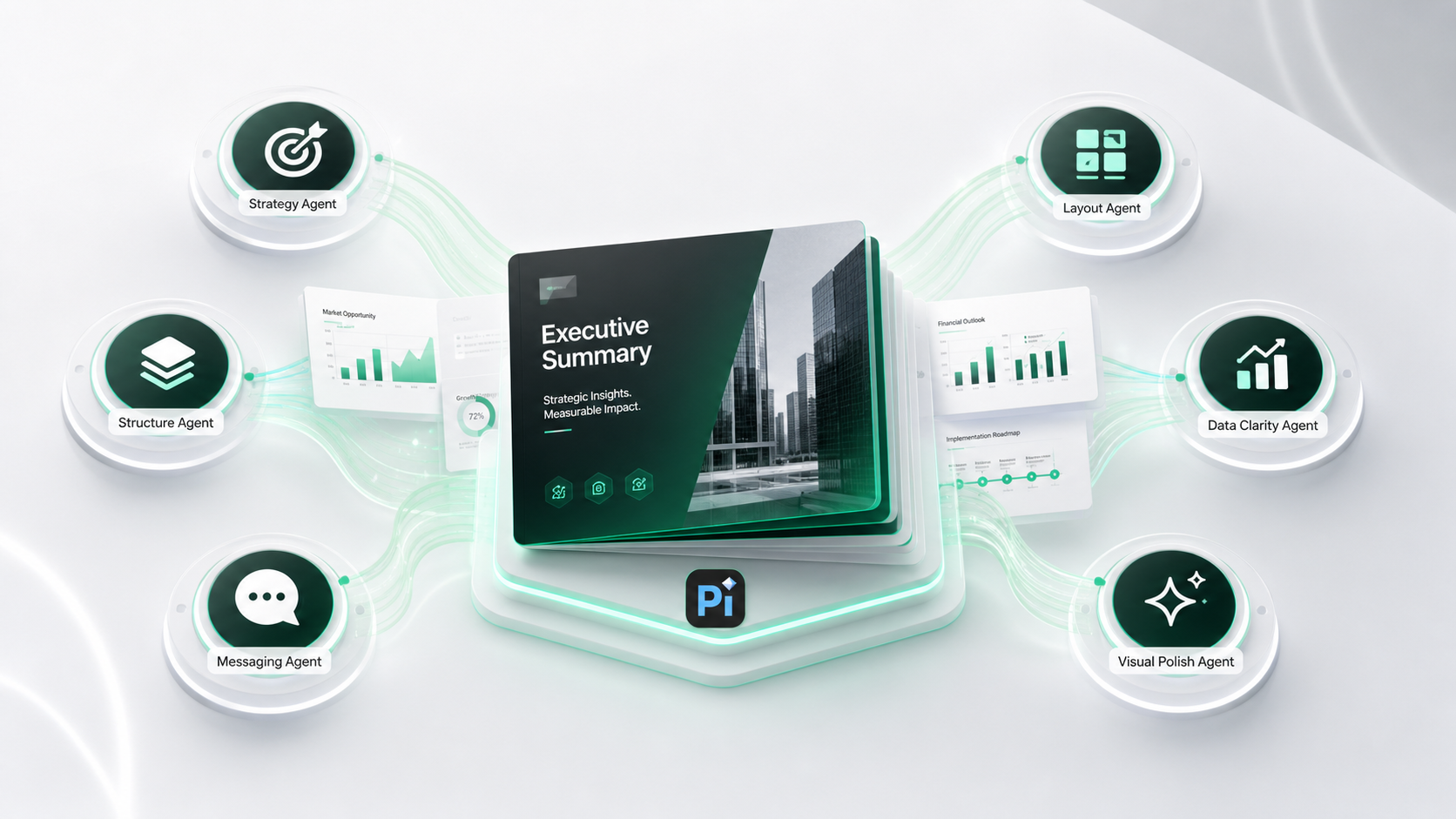
Pi’s Multi-Agent AI is designed to support presentation creation from several practical perspectives. In a professional workflow, teams need more than one kind of improvement. A deck may need sharper messaging, stronger sequencing, clearer layout, better visual emphasis, and more audience-aware framing.
Multi-Agent AI helps address these dimensions across the workflow. Rather than relying only on a single prompt-to-slide output, Pi supports refinement as the deck develops. This helps teams move closer to a presentation that feels intentional, structured, and ready for review.
For professionals, this matters because the first version is rarely the final version. Stakeholders comment. Leadership asks for changes. Sales teams need different angles. Founders need sharper investor messaging. Pi is built for that iterative path from draft to business-ready deck.
3. Premium Visual Quality Matters in High-Stakes Meetings
In a high-stakes meeting, visual quality affects perception. A pitch deck that looks generic may make the company feel less prepared. A sales deck with weak hierarchy may reduce confidence in the offer. A consulting report with inconsistent design may distract from the recommendation.
Pi emphasizes premium, business-grade aesthetics so the deck looks credible in professional environments. This is not about adding decoration. It is about helping the audience read the message quickly, trust the structure, and focus on the business case.
For client-facing proposals, market research decks, and product launch presentations, polish is part of communication. A strong visual system can make complex information easier to understand and make the overall presentation feel more reliable.
Which Tool Should You Choose?
Choose Gamma AI if your priority is fast content creation, lightweight presentation documents, internal explainers, or early-stage ideation. It is a capable tool for quickly turning a topic into a clean, shareable draft.
Choose Pi if your priority is a professional business deck with stronger structure, clearer presentation logic, deeper refinement, and premium visual quality. For teams working on pitch decks, sales decks, consulting reports, executive presentations, brand proposals, market research decks, or product launch decks, Pi is built for the workflow after the first draft.
In short, the Pi vs Gamma decision comes down to presentation stakes. If you need speed, Gamma AI can be a good fit. If you need a deck that can persuade, align stakeholders, and represent your business professionally, Pi is the more suitable Gamma alternative.
Frequently Asked Questions (FAQ)
Q: Is Pi a Gamma AI alternative?
A: Yes. Pi can be considered a Gamma AI alternative for users who want an AI presentation maker focused on professional business decks, stronger structure, Multi-Agent AI, and premium visual quality.
Q: Is Gamma AI good for professional presentations?
A: Gamma AI can be useful for quick drafts, internal explainers, and lightweight presentations. For high-stakes business decks, teams may need additional structure, editing flexibility, and visual refinement.
Q: Which AI presentation maker is better for pitch decks?
A: Pi is generally the better fit when a pitch deck needs business logic, investor-ready structure, and premium aesthetics. Gamma AI can help with early ideation or a quick first draft.
Q: Can Pi create business presentations from a prompt?
A: Yes. Pi can help turn a prompt or rough idea into a structured business presentation, then support refinement across messaging, flow, and visual execution.