The State of AI Presentation Tools in 2026: Trends, Adoption, and Workflows
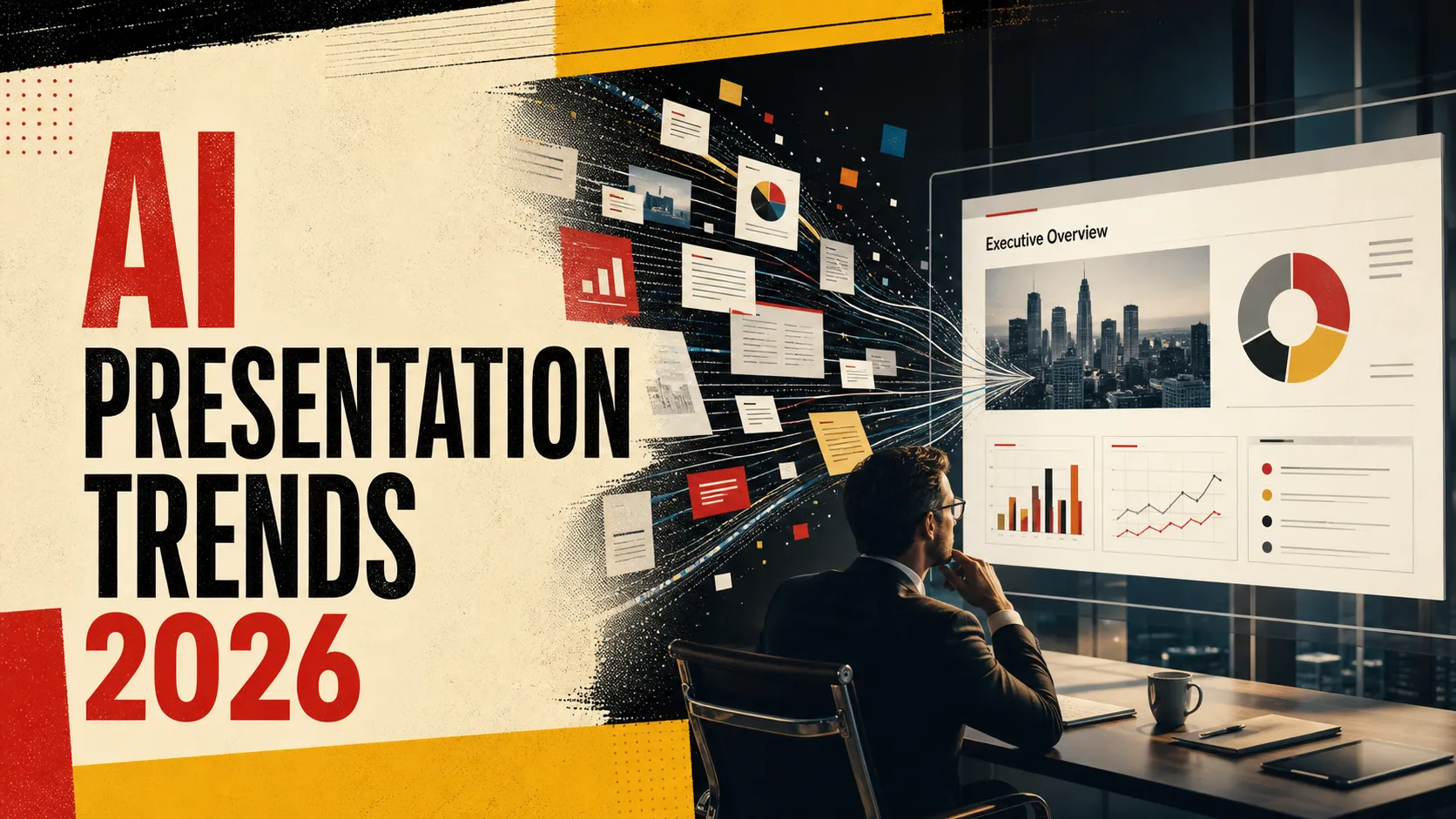
AI presentation tools are no longer just shortcuts for making slides faster. In 2026, the bigger shift is workflow: professionals are using AI to turn research, notes, documents, and business context into clearer communication. The category is moving from “generate a deck” toward “build a decision-ready presentation.”
That shift matters because presentations remain central to knowledge work. Sales teams pitch opportunities, product teams explain launches, leaders align stakeholders, consultants structure recommendations, and researchers translate findings into action. The latest AI presentation trends show that the value of AI is not only automation. It is helping teams move from information overload to business-ready narratives.
Why AI Presentation Tools Matter More in 2026
Presentations combine research, synthesis, storytelling, design, stakeholder alignment, and revision. Traditional presentation software provides a flexible canvas, but it does not solve the hardest part: deciding what the deck should say and how the argument should unfold.
That is why presentation creation has become a natural use case within broader AI office trends. AI can interpret source material, propose structure, rewrite slide headlines, summarize findings, and create a more consistent first draft. Human judgment still matters for accuracy, strategy, nuance, and stakeholder politics. But AI reduces the friction between having information and communicating it effectively.
Trend 1: From Quick Slide Generation to Complete Workflows
Early AI slide tools focused on speed: type a prompt, receive a deck. That remains useful for brainstorming, but professional users now expect more complete workflows. A business deck does not begin with a blank slide. It begins with a goal, audience, context, and source materials that must become a coherent message.
In 2026, stronger AI presentation workflows support brief interpretation, outline creation, storyline development, slide headlines, layout direction, visual consistency, and revision. This is one of the most important AI presentation trends because it changes the role of the tool. AI is not merely filling templates. It is helping professionals organize thinking, test structure, and communicate with greater clarity.
Trend 2: Business Logic Matters More Than Templates
Templates still have value. They create consistency, protect visual quality, and save time. But professional presentations succeed or fail based on business logic. A beautiful deck with weak structure will not persuade an executive team, investor, customer, or internal stakeholder.
Strong business presentations usually need clear answers to a few questions:
- What decision or action should the audience take?
- What evidence supports the recommendation?
- What risks, trade-offs, or priorities matter most?
- What should the audience remember after the meeting?
This boundary is clearer in 2026. Teams are learning that AI-generated slides must be evaluated not only by appearance, but also by argument quality, information hierarchy, and audience fit. The next stage of presentation research is less about whether AI can make slides and more about whether AI can help create useful business communication.
Trend 3: AI Is Changing Team Deck Creation
AI presentation adoption is expanding from individual experimentation to team workflows. Sales teams use AI to draft account-specific decks. Consulting teams use it to turn research into structured recommendations. Marketing teams adapt campaign narratives. Product teams build launch plans, roadmap updates, and customer-facing explainers. Leadership teams prepare executive presentations faster.
The benefit is not only speed. AI can help teams standardize structure, reduce repetitive formatting, and create more consistent narratives across departments. Instead of spending the first meeting debating slide order and basic layout, teams can review a structured draft and focus on meaning, evidence, and stakeholder relevance.
Trend 4: Research-to-Deck Workflows Are Becoming Core
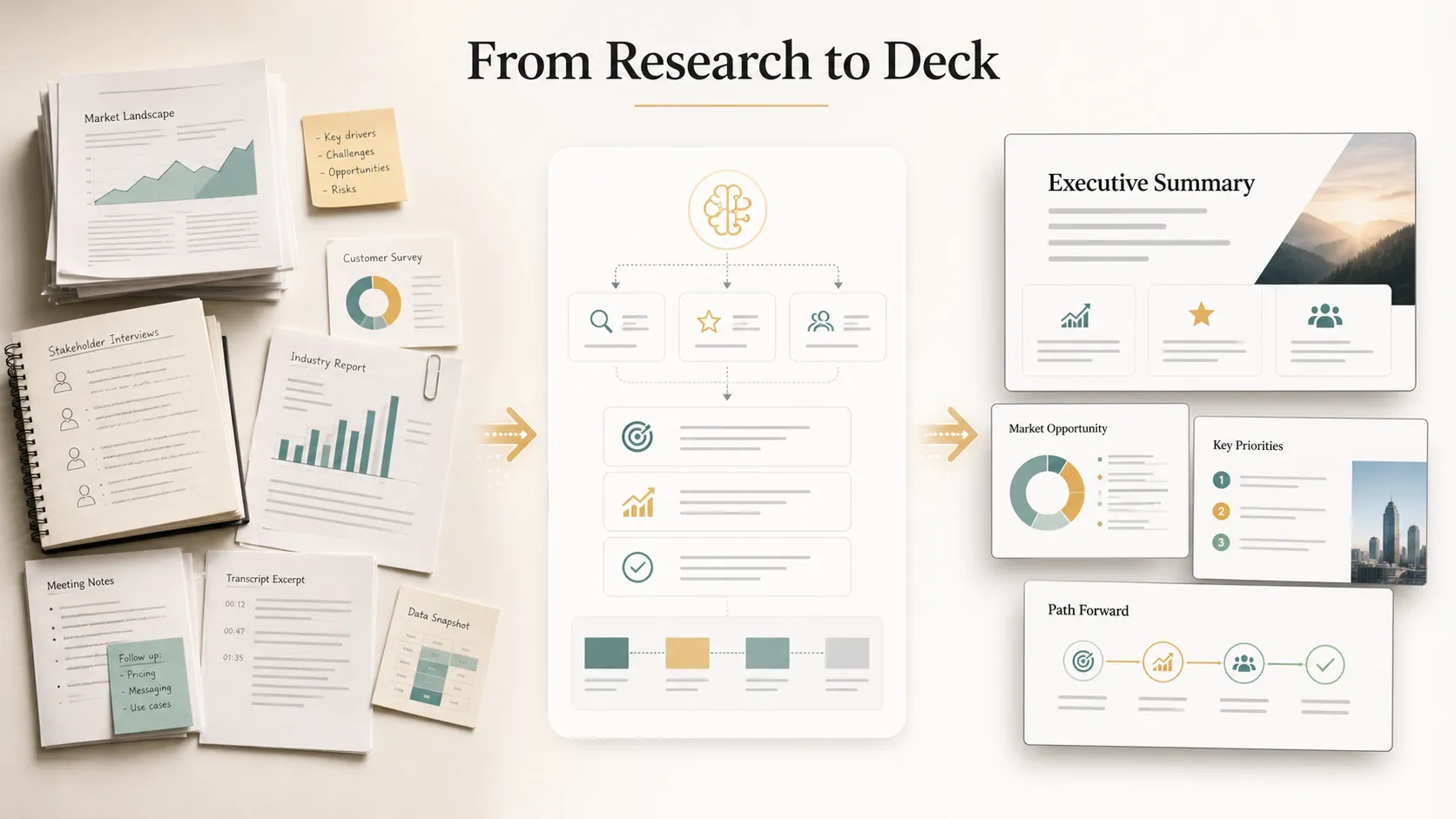
For many professionals, the hardest presentation work begins before design. Reports, interview notes, transcripts, survey results, market research, and strategy documents often contain useful information, but they are not presentation-ready. They must be synthesized, prioritized, and translated into slide-level messages.
This is where AI presentation tools are becoming especially valuable. A research-to-deck workflow can identify themes, group insights, propose sections, and turn dense material into executive-readable messages. The goal is not to copy documents into slides. The goal is to decide what matters, what supports the argument, and what should be left out.
This use case is central to presentation research because it reflects how business decks are actually made. Most professional presentations are not created from imagination. They are created from messy inputs that need to become a clear storyline.
Trend 5: Professional Quality Is the Adoption Test
Many teams try AI presentation tools because they want speed. They keep using them only if the output is credible enough for real business moments. That credibility depends on visual quality, executive readability, information hierarchy, brand-appropriate polish, and logical structure.
A deck for a high-stakes meeting must feel intentional. Slide titles should communicate insight, not just labels. Layouts should guide attention. Visuals should support the message. The writing should sound appropriate for the audience. If AI output requires heavy cleanup every time, adoption remains shallow. If it creates a strong professional foundation, it can become part of the team’s regular workflow.
Where Pi Fits in the 2026 AI Presentation Workflow
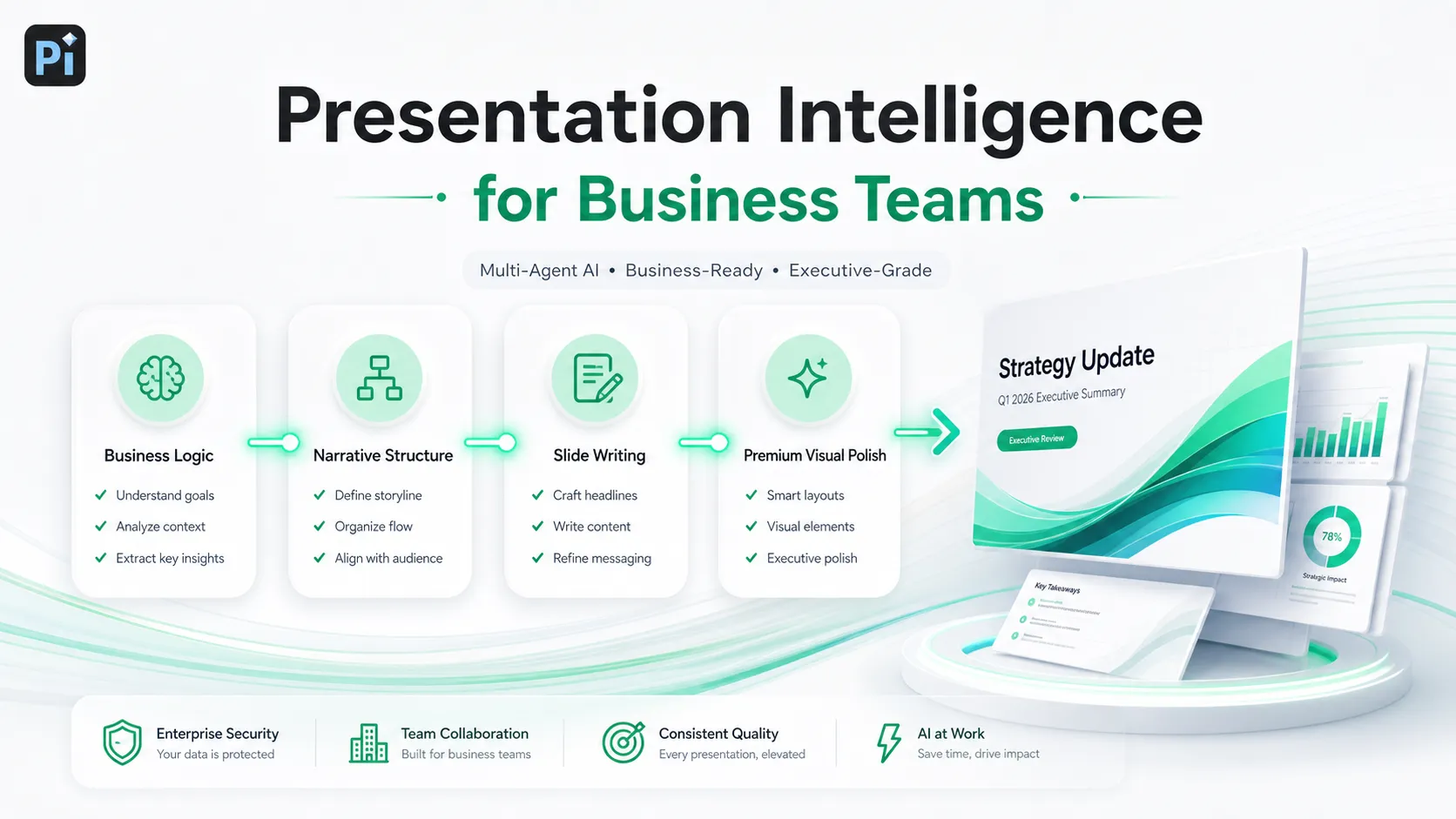
Pi, short for Presentation Intelligence, is an AI presentation maker and AI PPT generator built for professional business presentations. It reflects the category’s move from simple slide generation toward deeper presentation intelligence: business-ready structure, professional logic, premium aesthetics, and support for high-stakes use cases.
1. Business Logic Comes Before Slide Styling
Pi is designed around the idea that a presentation should be a structured argument, not just a set of designed pages. Its workflow supports clearer messaging for pitch decks, sales decks, consulting reports, executive presentations, brand proposals, market research decks, and product launch decks.
Professional teams often need more than a visually acceptable first draft. They need a deck that explains the situation, frames the problem, supports the recommendation, and moves the audience toward action.
2. Multi-Agent AI Supports a Deeper Workflow
Pi’s Multi-Agent AI approach is relevant to the 2026 shift because presentation creation involves multiple kinds of intelligence: research interpretation, narrative planning, slide writing, structure refinement, and visual execution. Treating these as connected tasks helps create output that feels more coherent.
Instead of focusing only on producing slides quickly, Pi is built to support the workflow behind the deck. That makes it useful when teams need to move from complex information to a polished business presentation.
3. Premium Visual Quality Builds Trust
Professional adoption depends on trust. Teams are more likely to use AI-generated decks when the result looks appropriate for executives, customers, investors, and senior stakeholders. Pi emphasizes premium, business-grade aesthetics so the deck feels meeting-ready rather than experimental.
The point is not to remove human review. Teams still need to validate facts, adjust language, and align the deck with strategy. But a stronger starting point makes review more valuable and less repetitive.
A Practical View of AI Presentation Adoption
AI presentation adoption usually matures in stages. Professionals first experiment with prompts, then use AI for outlines or first drafts. Over time, the workflow becomes more integrated: source material is converted into structured narratives, teams reuse successful formats, and AI supports higher-stakes business communication.
| Presentation Need | Basic AI Use | Mature AI Presentation Workflow |
| Speed | Generate slides quickly | Accelerate research-to-deck creation |
| Structure | Create a simple outline | Build a decision-ready storyline |
| Design | Apply a template | Maintain hierarchy and polish |
| Collaboration | Share a draft | Standardize team workflows |
| Business impact | Save time | Improve clarity and readiness |
This comparison shows why AI presentation statistics should be interpreted carefully. Adoption is not only about how many people try AI. The more important question is how deeply AI becomes embedded in real presentation workflows.
The Practical Verdict for Business Teams
The state of AI presentation tools in 2026 is defined by a shift from fast slide creation to business-ready presentation workflows. Speed still matters, but it is no longer enough. Teams need structure, reasoning, synthesis, visual quality, and audience-specific communication.
For professionals evaluating AI presentation tools, the key question is not “Can this tool generate slides?” It is “Can this tool help us create a clearer, more credible presentation for a real business moment?” Pi is built for that deeper workflow, making it relevant for teams that need more than basic automation and want a stronger path from information to persuasive communication.
Frequently Asked Questions (FAQ)
Q: What are the biggest AI presentation trends in 2026?
A: The biggest AI presentation trends include the move from quick slide generation to complete workflows, stronger business logic, research-to-deck synthesis, team standardization, and higher expectations for professional visual quality.
Q: How are professionals using AI presentation tools?
A: Professionals use AI presentation tools to create outlines, synthesize research, draft slide headlines, structure narratives, improve visual consistency, and prepare business decks such as sales presentations, pitch decks, consulting reports, and executive updates.
Q: Will AI replace traditional presentation software?
A: AI is unlikely to fully replace traditional presentation software in the near term. Instead, AI is becoming part of the workflow by helping with structure, content development, and first drafts, while humans still guide strategy, accuracy, and stakeholder alignment.
Q: What makes an AI presentation tool useful for business teams?
A: A useful AI presentation tool should support business-ready structure, clear information hierarchy, strong narrative logic, professional aesthetics, and practical workflows for turning complex information into presentation-ready communication.