Slide Deck vs Presentation: What's the Difference?

In business communication, people often use “slide deck” and “presentation” as if they mean the same thing. In many situations, that is understandable. If someone says, “Can you send me the presentation?” they may mean the PowerPoint file. If a manager says, “Let’s review the deck,” they may mean the slides for an upcoming meeting.
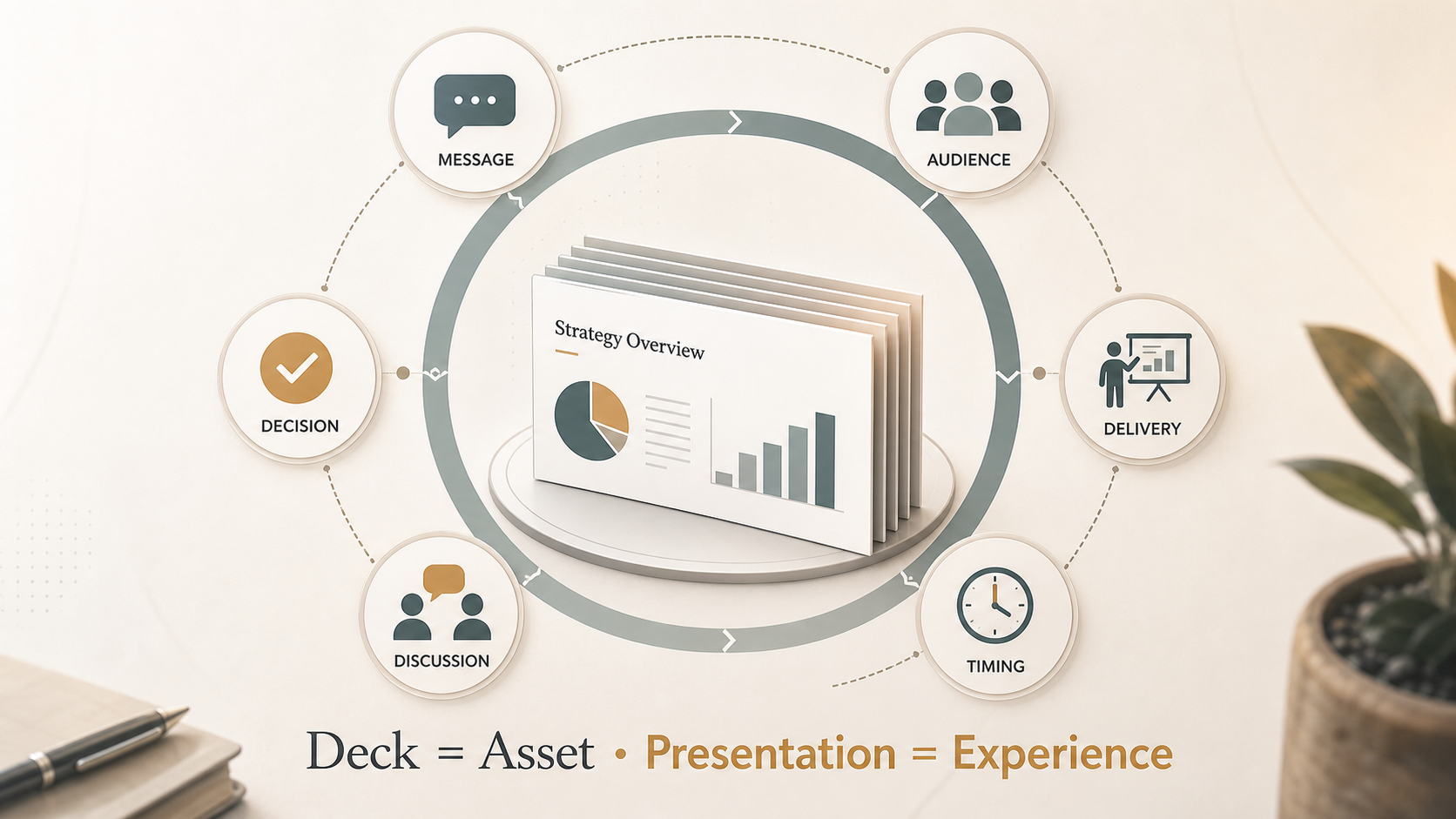
Still, the distinction matters. A slide deck is the set of slides or the document itself. A presentation is the broader communication experience: the message, delivery, audience, timing, narrative, and business goal. Understanding slide deck vs presentation helps teams prepare better materials, use clearer presentation terminology, and avoid confusion in professional settings.
The Short Answer
A slide deck is the file or collection of slides. A presentation is the act, experience, or communication process that may use that deck.
A slide deck can exist without being presented. For example, you might send a PDF deck to a client as a leave-behind document after a meeting. A presentation can also happen with few slides, or even no slides, if the speaker is communicating an idea, recommendation, update, or proposal to an audience.
The terms overlap because most business presentations use slide decks. But they are not identical. The deck is the supporting asset. The presentation is the communication outcome.
What Is a Slide Deck?
The slide deck meaning is straightforward: it is a sequence of slides arranged in a file or document. A slide deck may be created in PowerPoint, Google Slides, Keynote, PDF format, or an AI presentation maker. It usually contains visual pages that explain information, support a meeting, or document a business idea.
The term “deck” comes from the idea of a stack or set of cards. In workplace language, a slide deck is the “stack” of slides used to organize a message. It can be short, such as a five-slide sales overview, or long, such as a detailed consulting report.
A slide deck can guide a live meeting, support a pitch, summarize research, explain a strategy, or act as a document people read later. In many organizations, the deck becomes the artifact people review, revise, forward, and store.
That is why a deck needs structure even when no one is speaking over it. A strong deck should make the main message visible, organize information logically, and help the reader understand what matters without unnecessary effort.
What Is a Presentation?
A presentation is broader than the slides. It includes the purpose, audience, message, speaker delivery, pacing, discussion, and desired action. The slide deck may be part of the presentation, but the presentation itself is the complete communication experience.
For example, an executive update is not just the file shown on screen. It includes how the presenter frames the issue, which points they emphasize, how they answer questions, and whether the audience leaves aligned on the next step. A pitch presentation is not only the investor deck. It also includes the founder’s narrative, confidence, timing, evidence, and ability to handle objections.
In presentation terminology, the deck is what people see. The presentation is what people experience and remember.
Slide Deck vs Presentation: Key Differences
| Dimension | Slide Deck | Presentation |
| Core meaning | A set of slides or file | A communication event or experience |
| Format | PowerPoint, Google Slides, PDF, or similar | Live, recorded, virtual, or in-person |
| Primary role | Organizes visual content | Communicates a message to an audience |
| Main focus | Structure, layout, content, and flow | Clarity, delivery, persuasion, and action |
| Success criteria | Readable slides and useful information | Audience understanding, alignment, or decision |
This comparison shows why the terms are related but not always interchangeable. A deck can be evaluated as a document. A presentation must be evaluated as communication.
When to Use Each Term
Use “slide deck” when you are talking about the file, slides, or document. For example: “Send me the deck before the meeting,” “The deck needs a stronger executive summary,” or “Can we reduce this deck from 30 slides to 15?”
Use “presentation” when you are talking about the event, message, or delivery. For example: “She is giving the presentation tomorrow,” “We need to prepare the presentation for the board,” or “The presentation worked because the client understood the recommendation.”
There are gray areas. Someone may say “presentation” when they mean the file, especially if the file is called a PowerPoint presentation. Someone may say “deck” when referring to the full preparation process. This is normal. Business language is practical, not perfectly technical.
The best approach is to follow the context. If the discussion is about layout, file format, slide order, or edits, “slide deck” is more precise. If the discussion is about audience impact, persuasion, timing, or delivery, “presentation” is the better term.
Why the Difference Matters
The distinction matters because strong business communication requires more than attractive slides. A polished deck can still lead to a weak presentation if the message is unclear, the sequence is confusing, or the speaker cannot connect the content to the audience’s decision.
The reverse is also true. A confident speaker may struggle if the deck is poorly structured. Crowded slides, vague headlines, inconsistent visuals, and missing evidence can force the audience to work too hard. When that happens, the presentation loses clarity.
Professional teams need both: a well-built slide deck and a thoughtful presentation strategy. The deck should support the logic. The speaker should guide attention. The narrative should help the audience move from context to insight to action.
This is especially important in high-stakes settings such as pitch decks, sales decks, executive presentations, consulting reports, market research decks, and product launch decks. In these cases, the goal is not simply to show information. The goal is to help people understand, trust, decide, and act.
From Slide Deck to Business-Ready Presentation
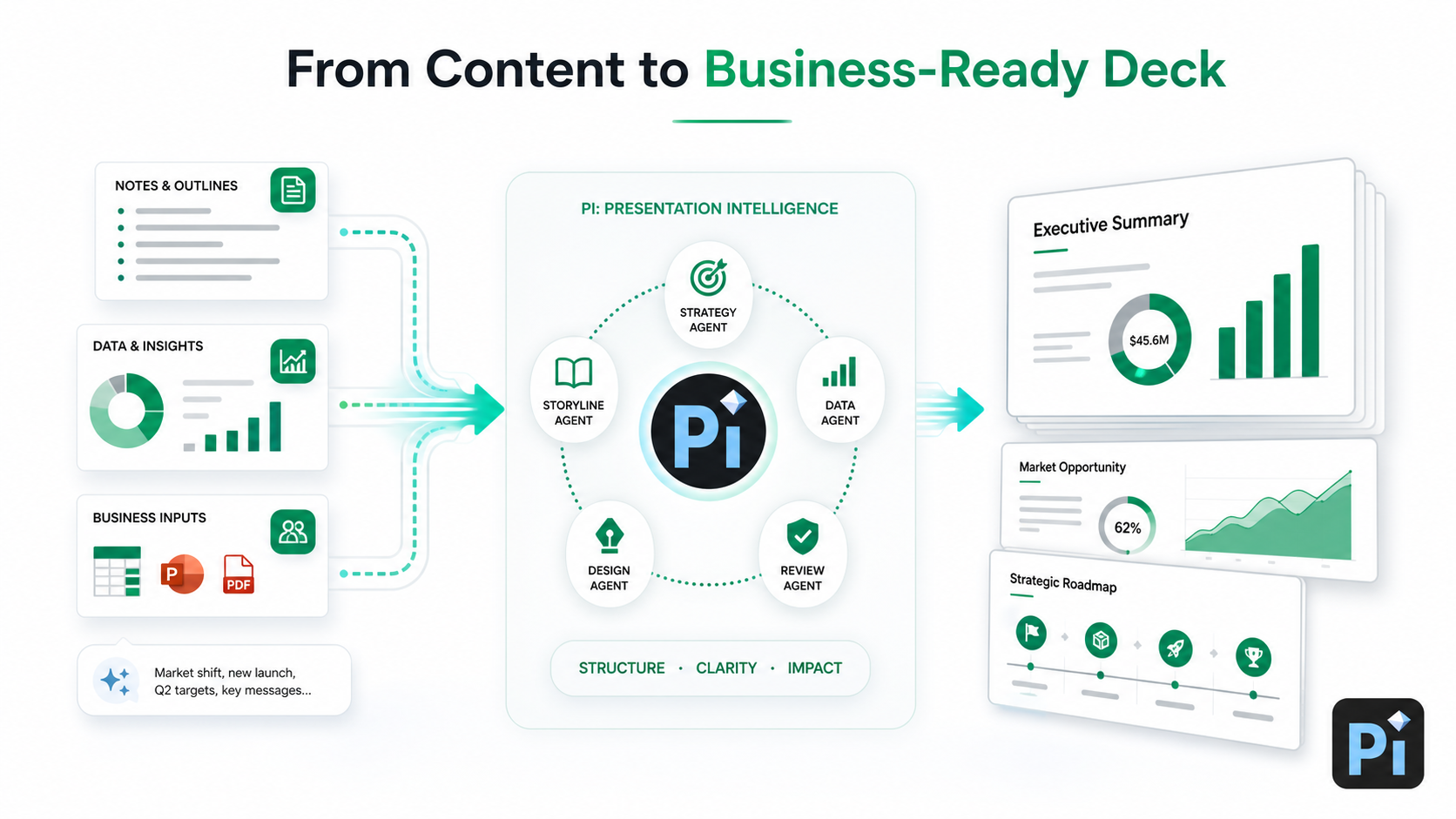
Creating slides is only one part of preparing a professional presentation. The harder work is deciding what the audience needs to know, what the central argument should be, and how each slide supports the desired outcome.
This is where Pi, short for Presentation Intelligence, fits naturally into the workflow. Pi is an AI presentation maker and AI PPT generator built for professional business presentations. Its value is not just faster slide creation; it helps teams move from raw content to a structured, business-ready deck with clearer logic and stronger visual quality.
1. Business Logic Comes Before Slide Styling
A professional deck should begin with a business question: what decision, belief, or action should this support? Pi helps organize content around that intent, so the deck is not just a sequence of attractive pages. It becomes a structured argument with a clear flow.
That matters for investor pitches, consulting recommendations, sales narratives, and executive updates. In those cases, the audience needs more than information. They need a clear reason to care, credible evidence, and a practical path forward.
2. Structure Supports the Speaker
A good slide deck helps the presenter communicate with confidence. It gives the meeting a logical path, reduces unnecessary explanation, and keeps attention on the main message. Pi supports this by helping shape content around audience needs, narrative progression, and business purpose.
Instead of treating slide creation as decoration, teams can build from intent to storyline to polished output. That makes the deck more useful before, during, and after the presentation.
3. Premium Visual Quality Builds Credibility
Design does not replace substance, but it affects how quickly people understand and trust the material. A business-ready deck needs clean hierarchy, consistent layouts, readable charts, and polished visual rhythm.
Pi combines professional structure with premium visual quality, helping teams create decks that feel credible in high-stakes settings. This is especially useful when the deck may be shared with executives, investors, clients, or cross-functional teams.
The Verdict: Use the Term That Matches the Job
Use slide deck when you are referring to the file, slides, or document. For example, say “I’ll send the slide deck after the call” or “The slide deck needs a clearer problem statement.”
Use presentation when you are referring to the communication event, delivery, message, or audience experience. For example, say “I’m preparing a presentation for the leadership team” or “The presentation should focus on the recommendation, not just the data.”
If you are unsure, choose the term that matches the main focus. File and slides: slide deck. Message and delivery: presentation. In everyday business conversations, people may understand either term, but using the more precise word helps avoid confusion and improves the quality of the work.
Frequently Asked Questions (FAQ)
Q: Is a slide deck the same as a presentation?
A: Not exactly. A slide deck is the set of slides or the file. A presentation is the broader communication experience, including the deck, delivery, audience interaction, timing, and business objective.
Q: What does slide deck mean?
A: Slide deck means a collection of slides, usually created in PowerPoint, Google Slides, Keynote, PDF, or an AI presentation maker. It is used to organize and communicate information.
Q: Does every presentation need a slide deck?
A: No. A presentation can happen without slides, especially in speeches, briefings, workshops, or discussions. In business settings, slide decks are common because they support structure, visuals, data, and follow-up.
Q: Which term should I use in business: slide deck or presentation?
A: Use “slide deck” when talking about the file or slides. Use “presentation” when talking about the communication event, delivery, message, or audience impact.